SEO Portfolio Case Study: How a Burger Restaurant in Pune Increased Organic
SEO Portfolio Case Study: How a Burger Restaurant in Pune Increased Organic Traffic and Keyword Rankings in Just 2 Months
SEO Portfolio Case Study: Local Restaurant SEO Success in Pune
Search engines have quietly become the first place people go when hunger strikes. Whether someone wants a juicy burger, a quick snack, or late-night food, their journey usually begins with a simple Google search like “burger near me.” For restaurants, this means your online visibility often determines whether customers walk through your doors—or into your competitor’s.
This SEO portfolio case study explores how a burger restaurant with two locations in Pune successfully improved its online presence using a structured search engine optimization strategy. The website was built on WordPress, and the objective was simple yet powerful: increase organic search traffic, rank for more targeted keywords, and attract more local customers looking for burgers and snacks.
The results were achieved in just two months, demonstrating how strategic SEO can produce measurable growth for local food businesses. Organic visitors increased, keyword rankings improved, and new user acquisition grew significantly. These outcomes highlight the power of combining keyword research, on-page optimization, technical SEO, and local search strategies.
Understanding why this approach worked requires stepping back and looking at the modern restaurant discovery process. Today, diners check menus, reviews, and location details online before visiting a place. According to recent marketing research, 88% of diners search online before deciding where to eat, and over 90% of restaurant discovery happens through search engines and map apps.
That means restaurants without strong SEO visibility risk becoming invisible. This case study demonstrates exactly how an SEO expert transformed a local burger brand’s digital presence—turning search traffic into real customer interest and stronger brand awareness.
Understanding the Restaurant’s Digital Challenge
Running a restaurant today isn’t just about serving great food—it’s also about being visible online. The burger restaurant featured in this case study operated two locations in Pune, one of India’s most vibrant food cities. While the restaurant had loyal customers and good food quality, its online presence was underperforming.
When potential customers searched for phrases like “burger near me” or “burgers FC Road Pune,” the restaurant often appeared lower in search results. This meant that people who were actively searching for food nearby were more likely to discover competitors instead. In the restaurant industry, that’s like having a shop on a busy street but hiding the signboard.
The website itself was built on WordPress, which is a flexible and SEO-friendly platform. However, simply having a WordPress site does not guarantee visibility. Search engines still require proper optimization—clear site structure, relevant keywords, optimized content, and strong local signals.
The challenge also reflected a larger trend in the restaurant industry. Research shows that 90% of diners research restaurants online before visiting, and 64% of users click one of the top three local search results when choosing where to eat. This means restaurants that don’t rank well miss out on a massive number of potential customers.
The restaurant’s goal wasn’t just higher rankings. The real objective was bringing more hungry customers to the business by improving discoverability in local search results.
Project Overview
Business Model and Industry
The project focused on a B2C burger restaurant brand offering snacks such as burgers, wings, and pizza-style menu items. The business operated two locations in Pune, targeting local customers looking for quick and tasty food options.
Restaurants operate in one of the most competitive local search categories. People searching for food often want results immediately. When someone types “best burger near me,” they are usually ready to visit or order within minutes.
Local search statistics highlight how powerful these searches are. Studies show that 76% of local mobile searches lead to a store visit within 24 hours. That means ranking well in search results can directly influence foot traffic and sales.
Website Platform and SEO Scope
The restaurant’s website was built using WordPress, which allowed SEO experts to implement structured optimization. WordPress provides several advantages such as customizable metadata, SEO plugins, mobile responsiveness, and flexible content management.
The SEO campaign focused on improving four major areas:
-
Keyword research and targeting
-
On-page SEO optimization
-
Technical SEO improvements
-
Local SEO for location visibility
This multi-layered approach ensured that the website not only ranked better but also delivered a smoother experience for users.
Why SEO Is Critical for Restaurants in 2025
The Rise of Online Food Searches
The way people discover restaurants has completely changed. Instead of walking around looking for food places, most people now search online first.
Data shows that 62% of diners use Google search to find a restaurant, while nearly 78% of mobile local searches result in an offline purchase or visit.
Think about the typical scenario. Someone is out with friends and suddenly feels hungry. They pull out their phone and search for something like “burger near FC Road Pune.” Within seconds, Google shows a list of nearby restaurants. The restaurants appearing at the top receive the majority of clicks.
If your business doesn’t appear there, customers may never even know it exists.
How Local Search Drives Restaurant Traffic
Local search is incredibly powerful because it targets people with immediate buying intent. Unlike general searches, local queries usually indicate someone ready to visit or order food.
In India, digital marketing studies suggest that organic search drives around 53% of website traffic, while local searches account for roughly 23% of all searches with high purchase intent.
For restaurants, this means SEO isn’t just a marketing tactic—it’s a direct revenue driver. A well-optimized website can attract nearby customers, increase reservations, and boost online orders.
Project Goals and SEO Objectives
Increasing Organic Traffic
The first goal of the SEO campaign was to increase organic search traffic. Organic traffic refers to visitors who find a website through search engines without paid advertising.
Before SEO implementation, the restaurant’s website was receiving 878 organic visitors. While this number wasn’t extremely low, it indicated that the site had untapped potential.
Increasing organic traffic meant reaching more people who were actively searching for food in Pune.
Improving Keyword Rankings
The second goal focused on ranking for more relevant keywords, especially those related to burgers and local search.
When users search for food in a specific area, they often use phrases like:
-
burger near me
-
burgers FC Road Pune
-
best burger in Pune
Ranking for these keywords increases the chances that the restaurant will appear in search results exactly when customers are looking for food.
SEO Strategy Implemented by SEO Expert Sachin
The SEO campaign was implemented by SEO expert Sachin, who used a structured approach to improve visibility and search rankings.
The strategy combined multiple optimization techniques rather than relying on a single tactic. Each step focused on strengthening the website’s overall SEO performance.
The four main pillars of the strategy were:
-
Keyword research
-
On-page SEO
-
Technical SEO
-
Local SEO
By improving these areas simultaneously, the campaign ensured both search engine relevance and user experience.
Keyword Research Strategy
Identifying High-Intent Local Keywords
Keyword research forms the backbone of any SEO strategy. The goal is to identify the exact phrases potential customers type into Google when searching for a product or service.
For this project, the focus was on local food search queries. These are keywords that include location indicators such as “near me,” “Pune,” or specific areas like FC Road.
These searches are particularly valuable because they indicate immediate intent. Someone searching for “burgers near FC Road Pune” is likely ready to order food or visit a restaurant.
Keyword Examples Targeted
Some of the targeted keywords included:
-
Burger near me
-
Burgers FC Road Pune
-
Burgers near FC Road Pune
-
IniBurger
-
IniWings
-
Burger pizza restaurant FC Road
These keywords were selected based on search volume, local relevance, and customer intent.
On-Page SEO Optimization
On-page SEO focuses on optimizing the content and structure of individual pages so that search engines can understand them better.
For this project, several improvements were implemented.
Title tags and meta descriptions were optimized to include relevant keywords and location signals. These elements are important because they influence both rankings and click-through rates.
The website’s content structure was also improved using SEO-friendly headings. This helps search engines identify important topics and improves readability for visitors.
Another important step involved optimizing the menu pages and location pages. Restaurants often overlook these pages, but they are critical because they contain valuable search terms related to food items and local areas.
Internal linking was also strengthened. By linking relevant pages together, search engines can better understand the site’s structure and distribute authority across different pages.
Technical SEO Improvements
Technical SEO ensures that a website is easy for search engines to crawl and index.
Several technical improvements were implemented during the campaign.
Website performance was optimized to improve loading speed. Faster websites provide a better user experience and tend to rank higher in search results.
Mobile usability was another priority. With the majority of food searches happening on smartphones, a mobile-friendly website is essential.
The site architecture was also structured more effectively, making it easier for search engines to navigate the website and understand the relationship between pages.
Local SEO Strategy for Restaurant Locations
Local SEO was perhaps the most critical component of this campaign.
Since the restaurant operated in specific areas of Pune, the goal was to ensure the website appeared in local search results and map listings.
Location landing pages were optimized to include local keywords, directions, and relevant content about each restaurant location.
These pages help search engines connect the restaurant with specific geographic areas.
Local SEO is powerful because it targets customers nearby. Studies show that 88% of consumers who search for a local business visit or call within a day.
This makes local optimization one of the most effective marketing strategies for restaurants.
Results Achieved After 2 Months
After two months of SEO implementation, the website showed clear improvements across multiple metrics.
The campaign demonstrated that even a relatively short SEO period can produce noticeable results when strategies are executed correctly.
Organic Traffic Growth Analysis
Organic traffic increased from 878 visitors to 1095 visitors during the campaign.
This increase represents a strong improvement in visibility and search performance.
More organic visitors mean more potential customers discovering the restaurant through Google searches.
Keyword Ranking Improvement
Keyword rankings also improved significantly.
Before the campaign, the website had 29 keywords ranking in the Top 10 search results.
After SEO implementation, this number increased to 43 keywords in the Top 10.
Ranking in the Top 10 is critical because most users rarely scroll beyond the first page of search results.
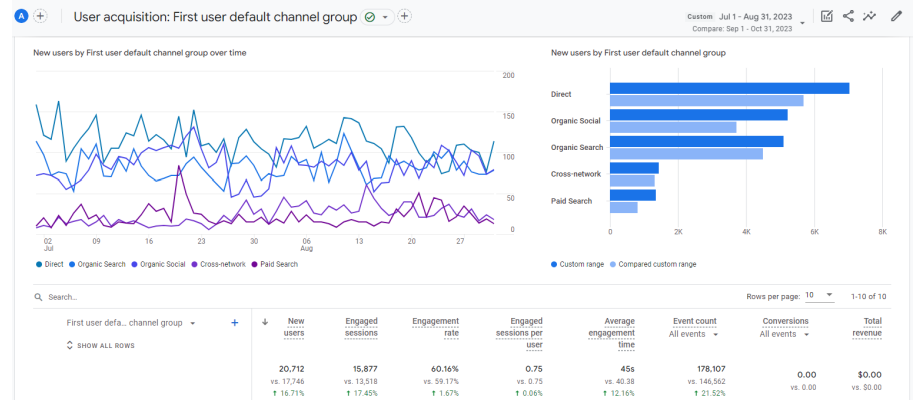
User Acquisition and Engagement Growth
Another important result was the increase in new visitors.
The campaign achieved a 16% growth in new user acquisition, meaning more people were discovering the restaurant for the first time.
This is particularly important for local businesses because it expands the customer base beyond existing loyal customers.
Key Performance Metrics Table
| Metric | Before SEO | After SEO |
|---|---|---|
| Organic Traffic | 878 | 1095 |
| Top 10 Keywords | 29 | 43 |
| New User Acquisition | — | +16% |
Lessons Learned from the SEO Campaign
This case study highlights several key lessons about restaurant SEO.
First, local keyword targeting is essential. Restaurants must optimize for searches that include location signals.
Second, technical performance matters. Even the best content won’t rank well if the website is slow or difficult to crawl.
Third, consistent optimization delivers results. SEO is not a one-time task but a continuous process.
Why Local Restaurant SEO Works
Local SEO works because it targets people who are already looking for nearby businesses.
Unlike traditional advertising, it reaches customers at the exact moment they are ready to buy.
For restaurants, this means appearing in search results when someone searches for food nearby.
How Restaurants Can Replicate This SEO Strategy
Restaurants looking to improve their online visibility can follow a similar approach.
Start with keyword research, optimize website content, improve technical performance, and focus heavily on local SEO.
Combining these elements creates a powerful strategy that can drive consistent organic traffic.
Conclusion
This SEO case study demonstrates how a well-structured SEO strategy can transform a restaurant’s online visibility in a short time.
Through targeted keyword optimization, technical improvements, and strong local SEO practices, the restaurant successfully increased organic traffic, keyword rankings, and user acquisition within just two months.
For local businesses, especially restaurants, SEO is no longer optional. It is one of the most effective ways to attract new customers and grow sustainably.
FAQs
1. How long does restaurant SEO take to show results?
Most restaurants start seeing early improvements within 1–3 months, but stronger rankings typically develop over 3–6 months.
2. Why is local SEO important for restaurants?
Local SEO helps restaurants appear in searches like “burger near me”, allowing nearby customers to discover them easily.
3. Can small restaurants compete with large food chains in SEO?
Yes. Local SEO allows smaller restaurants to compete effectively by targeting location-specific searches.
4. What tools are used for restaurant SEO?
Common tools include Google Analytics, Google Search Console, keyword research tools, and local listing platforms.
5. Does WordPress help with SEO?
Yes. WordPress is highly SEO-friendly and supports plugins and customization that make optimization easier.